
Description
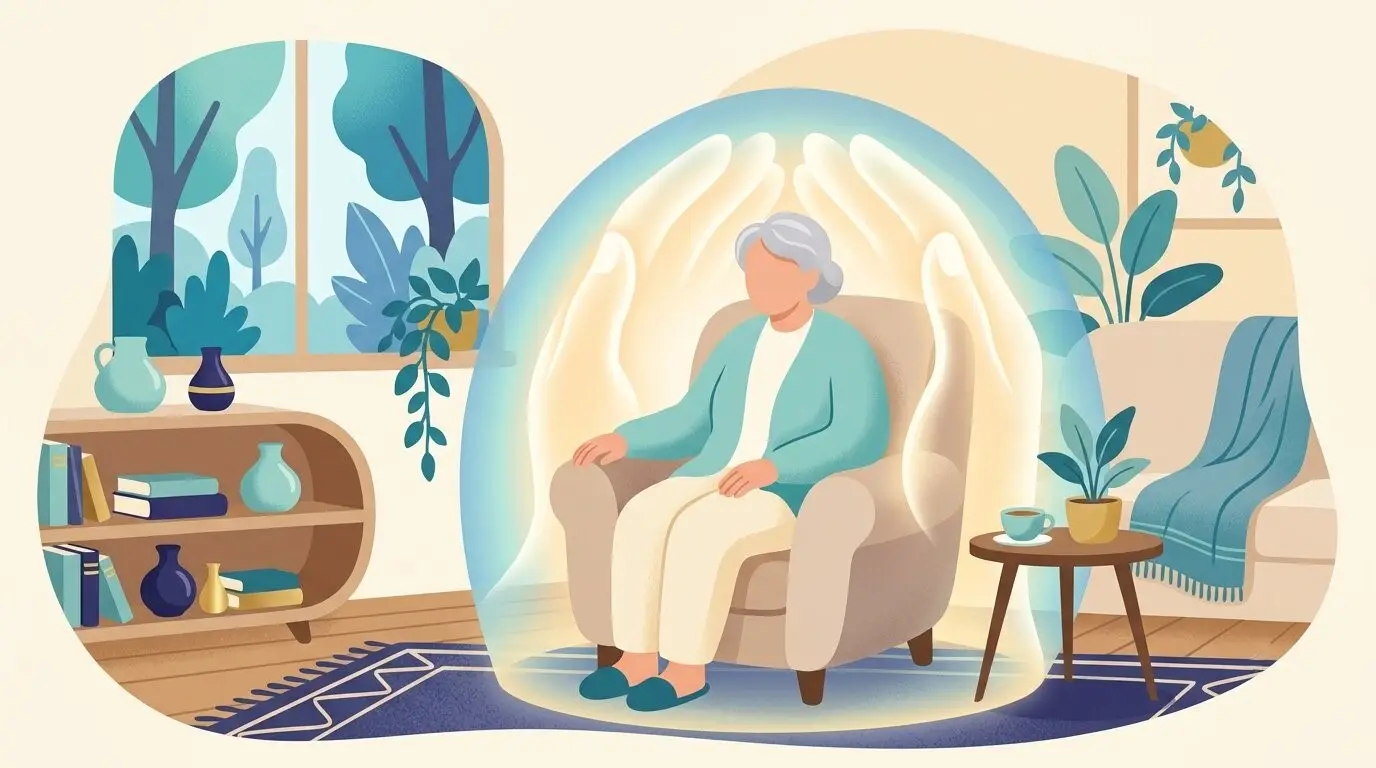
Care Certificate Standard 10 is the standard about the responsibility every worker carries for the people in their care. It covers what adult safeguarding means, the legal definition of an adult at risk, and your own role and responsibilities in safeguarding individuals. It covers the types of abuse, neglect and harm, and the indicators that point to them, what restrictive practices are and how they relate to your organisation’s own policies, and the risks that come with technology and how to keep somebody safe without being risk averse. It then covers reducing the likelihood of abuse, responding when abuse is suspected or disclosed, and the legislation, information sharing and local arrangements that sit underneath all of it.
Standard 10 is one of the sixteen standards in the Care Certificate, and it runs to four outcomes carrying twenty-two assessment criteria. The title of the standard itself changed in the 2025 update, from Safeguarding adults to Adult safeguarding, because the language and terminology in this area moved to The Care Act 2014.
The standards are published by Skills for Care, Skills for Health, NHS England and the Department of Health and Social Care. You can read the Care Certificate standards on the Skills for Care website, open the standards document itself, updated March 2025, or look at the Summary of changes Skills for Care published alongside it. The definitions quoted on this page are the glossary definitions from the standards document, and the outcome codes are the codes from that document.
What This Course Covers
The standard divides into four outcomes and the order matters. Outcome 10.1 sets out the principles of adult safeguarding and carries twelve of the twenty-two criteria: what the term means, the legal definition of an adult at risk, your own role, the types of abuse, what harm is, what restrictive practices are and how your organisation’s own policies relate to them, the indicators, the scope of harm, the factors behind abuse and neglect, the risks of using technology, dignity in practice, and where to get advice. Outcome 10.2 is about reducing the likelihood of abuse before it happens. Outcome 10.3 is the response: what to do if abuse of an adult is suspected, and how to raise concerns in accordance with ways of working. Outcome 10.4 is the framework around all of it: relevant legislation, local and national policies and procedures, sharing information with the relevant agencies, and what to do when you hit a barrier.
The content follows those four outcomes exactly as they are written, so the course can be mapped to an induction checklist or an evidence folder without editing. The other standards sit in the same healthcare foundation course range. The standard before this one is Awareness of Mental Health and Dementia, Care Certificate Standard 9, and the one after it is Safeguarding Children, Care Certificate Standard 11. Every Care Certificate course we run is listed together in the full course list.
Who It’s For
This course is written for the non-regulated workforce, which is how the standards document describes the people the Care Certificate was designed for. It names the roles in each setting, and in health roles these include assistant practitioner, care assistant, healthcare support worker, maternity support worker, nursing assistant, occupational therapy assistant, physiotherapy assistant, radiography assistant, speech and language therapy assistant, and senior care assistant. In adult social care they include activities worker, day care assistant, day care officer, domiciliary care worker, home care worker, nursing assistant in a nursing home or hospice, personal assistants, reablement assistant, residential care worker, senior home care worker, and support worker. If you are starting or progressing in one of those roles in health or social care, this course is written for you.
There is one feature of Standard 10 that sets it apart from the rest, and you should know about it before you start. This is the standard where your employer’s own local arrangements matter. Criterion 10.2e asks you to explain the local arrangements for the implementation of multi-agency adult safeguarding policies and procedures, and criterion 10.4a asks you to list the relevant legislation, local and national policies and procedures which relate to adult safeguarding. You cannot answer either of those from a course alone. You need them from the service you work in, which is why this page explains the framework and the criteria, and you fill in the local detail from your own organisation’s policy and your local safeguarding board.
If you are a registered professional, such as a doctor, nurse, social worker or occupational therapist, the standards document says you gain similar skills and knowledge within your professional training, so you do not need to also achieve the Care Certificate. Some employers still ask registered staff to complete it during induction, so check what your own employer expects.
What Adult Safeguarding Means
Outcome 10.1 asks you to understand the principles of adult safeguarding, and its first three criteria set the ground. Criterion 10.1a asks you to explain the term adult safeguarding. Criterion 10.1b asks you to give the legal definition of an adult at risk. And criterion 10.1c asks you to explain your own role and responsibilities in safeguarding individuals.
Criterion 10.1b is new in the 2025 update, and the glossary tells you where the answer comes from with a single line: legal definition, according to The Care Act 2014. That is not a placeholder. The change log for this standard records that some content, language and terminology was updated to reflect The Care Act 2014, and that is what a legal definition in this area is measured against now.
Criterion 10.1c is the one people skim, and it is the one that decides how you will be judged in a real situation. Your role and responsibilities in safeguarding individuals are yours, personally, and they do not transfer to the manager, the senior member of staff or the registered nurse. Reading the standard, knowing the types of abuse and recognising the indicators are the easy half. The hard half is that when you see something, what you do next is your responsibility and nobody else’s.
Types of Abuse, Neglect and Harm
Criterion 10.1d asks you to list the main types of abuse, and the glossary supplies the list itself. Abuse “may be physical, domestic violence or abuse, sexual, psychological or emotional, financial or material, modern slavery, discriminatory, organisational or institutional, neglect or acts of omission and self-neglect”. That is the standard’s own list, and it is worth reading as a working list rather than as definitions, because the point of it is that abuse in care is not only physical.
Neglect has its own entry, and it is defined as a type of abuse by omission. Neglect “involves the failure to meet a person’s needs, placing their health, safety, or wellbeing at risk”. That definition covers a great deal that does not look like abuse at all: a missed drink of water, a call bell that is not answered, a catheter that is not changed, a resident who stops being taken to the toilet because the shift is busy.
Criterion 10.1e asks you to describe what constitutes harm, and the glossary is precise. Harm “refers to any negative impact on an individual’s physical, mental, emotional, or social wellbeing”. Four channels, and the emotional and social ones are the ones most often missed. Harm does not require an injury.
Criterion 10.1g asks you to list the possible indicators of abuse, criterion 10.1h asks you to describe the nature and scope of harm to and abuse of adults at risk, and criterion 10.1i asks you to list a range of factors which have featured in adult abuse and neglect. The three sit together deliberately. The indicators themselves are not printed in the Care Certificate; they come from the multi-agency procedures your local service follows, and you should be able to point to where you got them. What the standard does fix is the framework you read them against: the types of abuse above, the definition of harm, and the scope of it.
Criterion 10.1i is the one that is easiest to skip and hardest to forget. Factors which have featured in adult abuse and neglect are usually not dramatic. They are usually ordinary pressures that went unmanaged: staffing shortfalls, a closed door, an unanswered concern, a rota that leaves one person alone with people who cannot complain. That is why the standard makes it a list rather than a definition. You are meant to be able to name them.
Restrictive Practices
Criterion 10.1f asks you to describe what constitutes restrictive practices, and it adds two things that are easy to miss: the organisation’s policies and procedures in relation to restrictive practices, and your own role in implementing these. Both were added in the 2025 update.
The glossary gives the definition the Care Certificate uses. Restrictive practice, or restrictive interventions, are defined as “interventions that restrict an individual’s movement, liberty and/or freedom to act independently in order to: take immediate control of a dangerous situation; end or reduce significantly the danger to the person or others; contain or limit the patient’s freedom for no longer than is necessary”.
That definition is doing a lot of work, and it is worth taking apart. The purposes are specific and limited: control of a dangerous situation, reducing danger to the person or others, and containment for no longer than necessary. None of those is a general justification for restriction, and none of them is about making a shift easier. The glossary also records the alternative the standards are pointing towards, under positive and proactive care: “reducing the need for restrictive interventions (DH 2014)”.
The two additions from 2025 are what make this criterion operational. Your organisation has policies, and you have a role in implementing them. A restrictive practice that is not covered by your organisation’s policy is not something you do because you think it is reasonable; it is something you do because there is a documented process and a decision behind it, and your job is to follow that process.
Technology, Dignity and Where to Get Advice
Criterion 10.1j asks you to describe the range of potential risks with using technology, and how to support individuals to be safe without being risk averse. Both halves were added in the 2025 update.
The glossary defines risk averse in a way that is the key to the whole criterion. Risk averse means “balancing safety measures with the benefits individuals can gain from accessing and using technology, such as on-line systems, and the individuals rights to make informed decisions”. Ban somebody from a video call with their family and you have made a safeguarding decision that is also a rights decision, and the glossary says those two things have to be balanced rather than one automatically beating the other.
The same standard is applied in the opposite direction. The risk with technology is real, and a person whose money, privacy or safety is being managed by somebody else online is at risk in a way that does not need a wound to be visible. Understanding the risk is what criterion 10.1j asks for. Refusing the technology is not what it asks for.
Criterion 10.1k asks you to demonstrate the importance of ensuring individuals are treated with dignity and respect when providing health and care services. It is a demonstrate criterion, and it sits at the end of outcome 10.1 for a reason. Dignity and respect are not a soft add-on to safeguarding; they are one of the ways safeguarding is prevented from becoming abuse in the first place.
Criterion 10.1l asks you to describe where to get information and advice about your role and responsibilities in preventing and protecting individuals from harm and abuse. The glossary is helpful here, because advice and support “can come from within or outside of your organisation and may include raising any concerns you may have through the most appropriate channels”. Within or outside. Your organisation’s safeguarding lead is the first place, and it is not the only place.
Reducing the Likelihood of Abuse
Outcome 10.2 asks you to reduce the likelihood of abuse, and it carries six criteria. Criterion 10.2a asks you to explain why an individual may be at risk from harm or abuse. Criterion 10.2b asks you to describe how care environments can promote or undermine people’s dignity and rights. Criterion 10.2c asks you to explain the importance of individualised and person-centred care. Criterion 10.2d asks you to explain how to apply the basic principles of helping people to keep themselves safe. Criterion 10.2e asks you to explain the local arrangements for the implementation of multi-agency adult safeguarding policies and procedures. And criterion 10.2f asks you to list ways in which the likelihood of abuse may be reduced, and it gives you the list: working with person-centred values, enabling active participation, promoting choice and rights, and working in partnership with others.
Criterion 10.2a is where the 2025 update made a deliberate language change, and it is worth knowing. The wording changed from the term vulnerable to an individual who may be at risk from harm or abuse. A person is not vulnerable because of a condition or a diagnosis. They are at risk because of a situation, and the situation can be changed. That is the whole difference in practice, and it is why the change was made.
Criterion 10.2b is the one that asks you to look at your own workplace. Care environments can promote or undermine people’s dignity and rights, and the criteria underneath outcome 10.1 are all about how environments do that. A care setting that schedules personal care at a time the person has not agreed to, or that discusses them in a corridor, or that leaves them waiting, is undermining dignity and rights while doing nothing that could be called abuse.
Criterion 10.2f is the list of four, and the glossary supplies the vocabulary for each of them. Person-centred values and care “include individuality, independence, privacy, partnership, choice, dignity, respect and rights and approaches to seeing the whole person”. Active participation is “a way of working that recognises an individual’s right to participate in the activities and relationships of everyday life as independently as possible”, in which the individual “is regarded as an active partner in their own care or support, rather than as a passive recipient”.
Criterion 10.2d, helping people to keep themselves safe, is the one that most needs your local knowledge. The basic principles of keeping somebody safe depend on the setting: the risks in a residential home are not the risks in somebody’s own kitchen, and the measures that work in one are not transferable to the other.
Responding to Suspected or Disclosed Abuse
Outcome 10.3 has a single criterion, and it is the one that matters most in a real situation. Criterion 10.3a asks you to explain what to do if abuse of an adult is suspected, including how to raise concerns in accordance with ways of working.
Two things are being asked at once. The first is what to do. The second is how to raise concerns, and the phrase in accordance with ways of working is doing the work. The glossary defines agreed ways of working as “employers policies, procedures and expected practices”, including “those less formally documented by individual employers and the self-employed or formal policies”. So the route you take is the route your service has agreed, not the route you think is best, and it is the route that will be evidenced.
The glossary also sets out what reporting means, which is broader than raising an alarm. Reporting is done “in line with agreed ways of working”, it “may include verbal, written and electronic methods”, and it includes “the recording of adverse events, incidents, confrontations, errors and issues”. A concern that is spoken aloud in a corridor and never written down has not been raised in the way the standard means, and if the concern turns out to be well founded, that record is what protects the person who raised it.
Protecting People Locally and Nationally
Outcome 10.4 asks you to protect people from harm and abuse, locally and nationally, and it carries three criteria. Criterion 10.4a asks you to list relevant legislation, local and national policies and procedures which relate to adult safeguarding. Criterion 10.4b asks you to explain the importance of sharing information with the relevant agencies. And criterion 10.4c asks you to describe the actions to take if you experience barriers in alerting or referring to relevant agencies.
Criterion 10.4b is about sharing, and the reason to share is protection. Safeguarding is multi-agency by definition: the person at risk is often not known to the agency that needs to know. The glossary reminds you that records “include written and electronic”, so sharing information is not only a conversation, and the 2025 update to outcome 10.1 also added the organisation’s policies and procedures and your own role in implementing them, which is the thread that runs through all three criteria here.
Criterion 10.4c is the one that is quietly reassuring, and it is the one people forget exists. Barriers in alerting or referring to relevant agencies are real. Sometimes the route is unclear, sometimes the person you would refer to knows the person you are worried about, sometimes you are told you are overreacting. The standard asks you to describe the actions to take when you hit one of those barriers, and that means you need to know them before you need them. Ask your safeguarding lead for the escalation route while nothing is wrong.
What You’ll Learn
Across 7 structured lessons, this course covers:
- What adult safeguarding means, and your own role (outcome 10.1). Explain the term adult safeguarding, give the legal definition of an adult at risk, and explain your own role and responsibilities in safeguarding individuals.
- Types of abuse and neglect, and their indicators (outcome 10.1). List the main types of abuse, describe what constitutes harm, list the possible indicators of abuse, describe the nature and scope of harm to and abuse of adults at risk, and list a range of factors which have featured in adult abuse and neglect.
- Restrictive practices, and factors behind abuse and neglect (outcome 10.1). Describe what constitutes restrictive practices, the organisation’s policies and procedures in relation to restrictive practices, and your own role in implementing these.
- Technology risks, dignity in practice, and where to get advice (outcome 10.1). Describe the range of potential risks with using technology and how to support individuals to be safe without being risk averse, demonstrate the importance of ensuring individuals are treated with dignity and respect when providing health and care services, and describe where to get information and advice about your role and responsibilities in preventing and protecting individuals from harm and abuse.
- Reducing the likelihood of abuse (outcome 10.2). Explain why an individual may be at risk from harm or abuse, describe how care environments can promote or undermine people’s dignity and rights, explain the importance of individualised and person-centred care, explain how to apply the basic principles of helping people to keep themselves safe, explain the local arrangements for multi-agency adult safeguarding policies and procedures, and list the ways the likelihood of abuse may be reduced.
- Responding to suspected or disclosed abuse (outcome 10.3). Explain what to do if abuse of an adult is suspected, including how to raise concerns in accordance with ways of working.
- Legislation, information sharing, and overcoming barriers (outcome 10.4). List relevant legislation, local and national policies and procedures which relate to adult safeguarding, explain the importance of sharing information with the relevant agencies, and describe the actions to take if you experience barriers in alerting or referring to relevant agencies.
Duration & Format
- Estimated time: 2.0 CPD hours
- Format: Fully online and self-paced: start, pause and return at any time
- Device: Desktop, tablet, or mobile
- Assessment: Knowledge-check quizzes throughout, plus a final assessment
Certification
On successful completion you receive a downloadable certificate confirming your achievement. It is mapped to Care Certificate Standard 10, and it counts for 2.0 CPD hours towards your continuing professional development record.
Common Questions
How long do I have to complete this course?
There is no deadline. The course is self-paced, so you can begin whenever you are ready, stop part way through, and pick it up again later from any device. If your employer is mapping this against an induction checklist, the outcome codes 10.1 to 10.4 used on this page are the ones you will be assessed against.
Do I get a certificate?
Yes. Once you complete the course successfully, a downloadable certificate is issued to you, mapped to Care Certificate Standard 10 and worth 2.0 CPD hours towards your record.
Why is this standard called Adult safeguarding now?
The title changed in the 2025 update, from Safeguarding adults to Adult safeguarding, and Skills for Care records that some content, language and terminology was updated to reflect The Care Act 2014. The change is not cosmetic. The same update added a criterion asking you to give the legal definition of an adult at risk, and the glossary points you to The Care Act 2014 for it, so the terminology you learn here matches the terminology you will meet in your local multi-agency procedures.
What is the difference between abuse and neglect?
Neglect is a type of abuse by omission. The glossary defines it as the failure to meet a person’s needs, placing their health, safety or wellbeing at risk. Abuse more broadly “may be physical, domestic violence or abuse, sexual, psychological or emotional, financial or material, modern slavery, discriminatory, organisational or institutional, neglect or acts of omission and self-neglect”. So the difference is not that one is worse than the other. It is that neglect happens through something not being done, which is why it is the abuse most often missed and the one most often disguised as a staffing problem.
Is this course accredited?
This is a CPD-accredited course aligned to the Care Certificate framework published by Skills for Care, Skills for Health, NHS England and the Department of Health and Social Care, updated 2025.
Which version of the standards does this cover?
The 2025 update, and this standard changed more than most inside it. The title changed to Adult safeguarding, and content, language and terminology were updated to reflect The Care Act 2014. Within outcome 10.1, the 2025 update added the legal definition of an adult at risk, added the organisation’s policies and procedures in relation to restrictive practices and your own role in implementing these, and added the range of potential risks with using technology together with how to support individuals to be safe without being risk averse. Outcome 10.2 changed its wording from the term vulnerable to an individual who may be at risk from harm or abuse. Skills for Care recommends a thorough review of this standard so that the formatting and the updated and replaced criteria are all captured. This course follows the current version, and the outcome codes on this page are the codes from that document.
Care Pro Academy · Registered in the UK · Mundells, Welwyn Garden City, Hertfordshire AL7 1FT

Reviews
There are no reviews yet.