
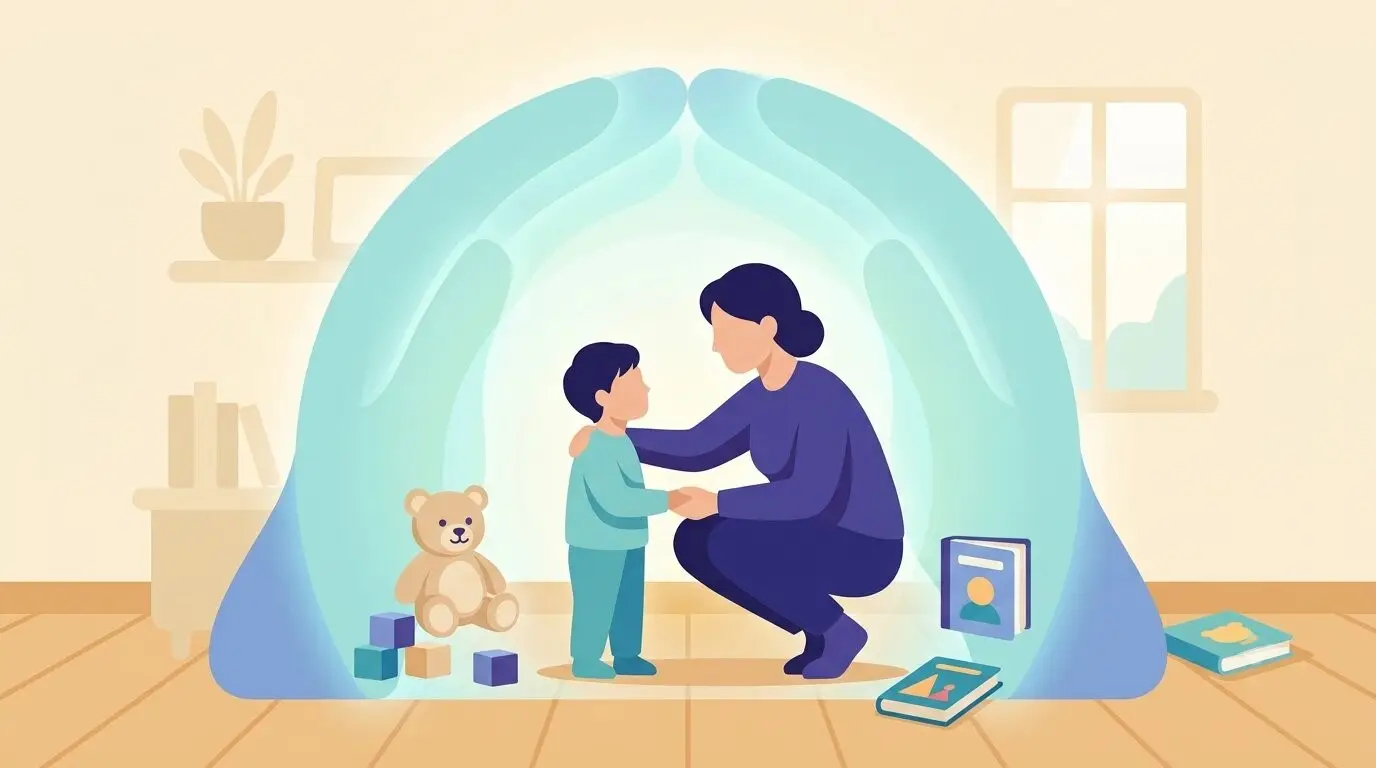
Description
Care Certificate Standard 11 is the shortest standard in the Care Certificate, and that is not an oversight in the document. It is how the standard is written. It contains one outcome, 11.1, Safeguard children, and that outcome splits into two branches depending on where you work. If you work in health, you must meet the most up to date national minimum training standards for safeguarding children, at the level appropriate to your workplace, as set out in the intercollegiate guidance issued by the Royal College of Nursing. If you work in social care, you must explain what you have to do if you suspect a child or young person, met in any circumstances, is being abused or neglected. Read the whole standard and that is the requirement. The length of the outcome is not the length of the job.
The standards are published by Skills for Care, Skills for Health, NHS England and the Department of Health and Social Care. You can read the Care Certificate standards on the Skills for Care website, open the standards document itself, updated March 2025, or look at the Summary of changes Skills for Care published alongside it. The definitions quoted on this page are the glossary definitions from the standards document, and the outcome code is the code from that document.
What This Course Covers
There is something worth saying plainly about this standard before you start it, because it is unlike anything else in the Care Certificate. Every other standard in the document is built out of numbered outcomes with lettered criteria underneath them. Standard 11 has one outcome and no criteria beneath it. Outcome 11.1 is Safeguard children. That is the whole of the standard as Skills for Care, Skills for Health, NHS England and the Department of Health and Social Care publish it.
What the outcome does is set a floor, not a ceiling. It tells you the minimum standard of safeguarding competence for someone working with children or young people, and it splits that minimum into two routes. The health route sends you to the national minimum training standards for safeguarding children, at the level appropriate to your workplace, as set out in the intercollegiate guidance issued by the Royal College of Nursing. The social care route asks you for something much more direct and much more testable: you must be able to explain what you do if you suspect a child or young person is being abused or neglected.
That second route is the one most people in social care are assessed on, and it is the one this course follows. The standard does not ask you to hold a particular qualification. It asks you to be able to state, in order, what happens when a concern exists. Where do you take it, who do you tell, what do you record, and what do you do if nobody acts. A course that teaches you the types of abuse but leaves you unable to answer that question has not met the outcome, however many pages it runs to.
The content follows the outcome as it is written, so the course can be mapped against an induction checklist or an evidence folder without editing. The other standards sit in the same healthcare foundation course range. The standard before this one is Adult Safeguarding, Care Certificate Standard 10, and the one after it is Basic Life Support, Care Certificate Standard 12. Every Care Certificate course we run is listed together in the full course list.
Who It’s For
This course is written for the non-regulated workforce, which is how the standards document describes the people the Care Certificate was designed for. It names the roles in each setting, and in health roles these include assistant practitioner, care assistant, healthcare support worker, maternity support worker, nursing assistant, occupational therapy assistant, physiotherapy assistant, radiography assistant, speech and language therapy assistant, and senior care assistant. In adult social care they include activities worker, day care assistant, day care officer, domiciliary care worker, home care worker, nursing assistant in a nursing home or hospice, personal assistants, reablement assistant, residential care worker, senior home care worker, and support worker.
It also covers the people the standard is really aimed at, which is everybody whose work brings them into contact with children or young people. The old description on this page put it plainly: even where children are not the main focus of your role, you still need this. A home care worker supporting an adult who has a child at home, a receptionist booking appointments for a paediatric service, a support worker in an adult day centre who notices a young person waiting in the corridor, each of them has a duty that does not switch off because the child is not on the rota.
Two things to check before you start. First, this course follows the social care branch of outcome 11.1. If you work in health, the standard sets a different requirement for you, and it is a requirement about training level rather than about the reporting route. Second, if you are a registered professional, such as a doctor, nurse, social worker or occupational therapist, the standards document says you gain similar skills and knowledge within your professional training, so you do not need to also achieve the Care Certificate. Some employers still ask registered staff to complete it during induction, so check what your own employer expects.
Safeguard Children: The Standard in Full
This is the complete text of outcome 11.1, set out exactly as it appears in the standards document.
Outcome 11.1. Safeguard children.
If they work in health: meet the most up to date national minimum training standards for safeguarding children at the level appropriate to their workplace, as set out in the intercollegiate guidance issued by the Royal College of Nursing.
If they work in social care: explain what they must do if they suspect a child, young person (met in any circumstances) is being abused or neglected.
Read that back and notice how much weight sits on the phrase in any circumstances. The standard is explicit that the child or young person does not have to be part of your caseload, your shift or your service. A young person met in passing, in a corridor, at a childminders group, at a GP surgery, in a family home while you are supporting somebody else, still counts. The circumstances of the meeting are irrelevant to the duty, and that is deliberate, because the situations where abuse is most likely to be noticed are exactly the situations nobody planned for.
The other thing to notice is what is missing. There are no sub-criteria. There is no criterion asking you to list the types of abuse, and no criterion asking you to list indicators. That is not because those things are unimportant. It is because for this standard, the document deliberately points outwards rather than inwards, towards the intercollegiate guidance in one branch and towards your own local procedures in the other.
The Two Branches: Health and Social Care
The two branches are not two levels of the same thing. They are two different questions, and a learner can answer one of them and fail the other.
The health branch asks about the training you have done. Meet the most up to date national minimum training standards for safeguarding children, at the level appropriate to your workplace, as set out in the intercollegiate guidance issued by the Royal College of Nursing. The standard does not name a level for you, and it does not name a course. It names a document and it names your workplace. The level depends on the role you hold, so the first thing a health worker needs to do is find out what level the intercollegiate guidance requires for the job they do, and check that the training they are doing matches it. A certificate that is not the one the guidance asks for does not satisfy the outcome, however good the course was.
The social care branch asks about behaviour. Explain what they must do if they suspect a child, young person (met in any circumstances) is being abused or neglected. That is a testable statement, and the word that matters most in it is explain. You are not being asked to have a policy in your head. You are being asked to be able to say out loud, in order, what you will do. Most people who fail this part of an induction are not failing because they do not care about children. They are failing because nobody ever sat them down and wrote the sequence down with them, and because in the moment, under pressure, with a disclosure in the corridor, a person with no rehearsed sequence freezes.
That is why this course spends its time on the sequence rather than on definitions. And that is why your employer’s own policy still has to be added to it. The standard sets the requirement that you know the route. Your service holds the route.
What You Must Do If You Suspect Abuse or Neglect
Because the social care branch of outcome 11.1 asks you to explain what you must do, this is the part of the course that has to be usable under pressure. The shape of the answer does not change from one organisation to the next, even though the names and numbers do.
Stop and deal with the child first. Whatever else happens, the immediate need of the child comes before the paperwork and before the administrative process. A child who has just told you something is still in front of you.
Listen, and do not lead. The glossary for the standards does not set out a script for this, because a script is exactly the wrong thing when a child is talking. Take what is said seriously, do not promise outcomes you cannot deliver, do not interrogate, and do not put words in the mouth of a child who is already finding it hard to speak.
Do not investigate it yourself. This is the most common and most damaging error, and it is worth being blunt about it. A concern about a child is referred, not investigated. Interviewing a child, confronting a parent, checking records yourself, or promising somebody that you will find out what happened are all things that can stop a child being protected, because they change what happens next. If you find yourself asking a child to repeat what they told you so that you can be more certain, you have already gone too far.
Report it through your service’s agreed route. The glossary defines agreed ways of working as “employers policies, procedures and expected practices”, including “those less formally documented by individual employers and the self-employed or formal policies”. Reporting is done “in line with agreed ways of working” and “may include verbal, written and electronic methods”. It also includes “the recording of adverse events, incidents, confrontations, errors and issues”. So a concern spoken aloud in a corridor and never written down has not been reported in the way the standard means, and if the concern turns out to be well founded, that record is what protects the person who raised it.
Record it in the way your service records it. The glossary records that records “include written and electronic”. Write it the same day, use the form or system your organisation uses, stick to what you saw and what was said, and do not soften it and do not sharpen it.
Keep the child safe in the meantime. If a child is in immediate danger, that takes priority over every reporting step above. Your service’s policy will tell you what that means in your setting, and you should know it before you need it.
Know what to do when nothing happens. The glossary reminds you that advice and support “can come from within or outside of your organisation and may include raising any concerns you may have through the most appropriate channels”. Within or outside. If you report and hear nothing back, or if you are told the concern is not valid, or if the route is unclear, that is a barrier, and barriers in this area have consequences for the child. Know your escalation route while nothing is wrong.
Keep it confidential. The glossary for the standards notes that confidentiality is covered by the agreements you work under and that personal information must be handled in line with legal requirements and the relevant data protection rules. A child who tells you something has asked for something in return, which is that not everybody in the building finds out.
Types of Abuse and Neglect
The Care Certificate standard for safeguarding children does not print a list of types of abuse, and it does not print a list of indicators. Those lists belong to the intercollegiate guidance and to your local multi-agency procedures. What the standards document does provide is the vocabulary, because the glossary is shared across the whole Care Certificate, and the definitions in it are the definitions you will meet in your local paperwork.
Abuse, in the glossary, “may be physical, domestic violence or abuse, sexual, psychological or emotional, financial or material, modern slavery, discriminatory, organisational or institutional, neglect or acts of omission and self-neglect”. Read that as a working list rather than a set of categories to tick. The point of including domestic violence or abuse, modern slavery, and discriminatory or organisational abuse in the same sentence is that none of those require a visible injury, and three of them are not delivered by a stranger.
Neglect has its own entry, and the definition is blunt. Neglect “is a type of abuse by omission, it involves the failure to meet a person’s needs, placing their health, safety, or wellbeing at risk”. For children this covers the whole range of a need not being met: food, clothing, warmth, medical care, supervision, education, emotional attention, or the simple presence of an adult who is reliably there. Neglect is the abuse most often mistaken for circumstance, and it is the one where a good reason is most likely to exist and is least likely to be the whole answer.
Harm is defined as “any negative impact on an individual’s physical, mental, emotional, or social wellbeing”. Four channels, and the emotional and social ones are the ones most easily missed. Harm does not require a mark.
One point of care, and it matters for how you read a disclosure. The glossary describes what abuse may be. It does not tell you that a child who mentions one of these things has been abused, and it does not tell you that a child who has been hurt will present a particular way. Some children disclose directly, some disclose indirectly and out of context, some say nothing at all because they have been told not to, or because they love the person, or because they have worked out that adults do not always act. What you are listening for is a change and an inconsistency, not a script.
What the Standard Leaves to Your Local Procedures
This section exists because a lot of safeguarding training is written as though a course can answer every question, and it cannot. Standard 11 is the clearest case of that in the Care Certificate, because it is one outcome long and it points outwards twice.
Three things in particular are not in the standard, and you need them from somewhere else. The first is the definition of the words themselves. The glossary in the standards document defines abuse, neglect and harm, but it does not define safeguarding, and it does not define child or young person. Those definitions come from the intercollegiate guidance and from national and local policy, and you should be able to say where you got them. The glossary also reminds you that precautions “relate to the health or care environment, the service type and current organisational, national, and or local policy/procedure and guidance”, which is the same point in a different form: the working rules are local, and they change.
The second is the list of indicators. A course can teach you what the categories of abuse are and still not be able to tell you what to look for in your own service, because a child in a residential home, a child in a school, a child in a family visiting their grandparent, and a child at the end of a phone call are all different pictures. Your local procedures hold the indicators for your setting. Ask for them and read them, because knowing the list is the difference between noticing and not noticing.
The third is the route. The name of your designated safeguarding lead, the number to ring, the referral form, the out-of-hours pathway, what your service does if a referral is made and nothing comes back. Write it down somewhere you will find it at the time you need it, and find out what the escalation route is while nothing is wrong.
Two further glossary entries are worth knowing for this area. Key people are “the people who are important to an individual and who can make a difference to his or her wellbeing”, and key people “may include loved ones, family, friends, carers and others with whom the individual has a supportive relationship”. For a child this is a working concept, because it is one of the ways you weigh up whether a concern is serious and whether the child has somewhere safe to go. Others, in the glossary, means “for example, your own colleagues and other professionals across health and social care”, and safeguarding in practice is a multi-agency job, so your colleagues in a different team may already know something you do not.
What You’ll Learn
Across 5 structured lessons, this course covers:
- What safeguarding children means (outcome 11.1). The single outcome in full, why it is written as one outcome with two branches, and what the health and social care routes each require of you.
- Types of abuse and their indicators (outcome 11.1). The Care Certificate glossary definitions of abuse, neglect and harm, why the standard does not print an indicator list, and where the indicator list for your setting actually comes from.
- Wider risk factors: parental health, domestic violence and online risk. The circumstances that sit behind a concern, and why a risk factor in a family does not tell you on its own whether a child is being abused.
- Children’s rights and the legal framework. The human rights basis, the Human Rights Act reference in the glossary, and the separation between the legal framework your employer works within and the framework this standard sets.
- What to do if you suspect abuse or neglect (outcome 11.1). The sequence: protect the child, listen, do not investigate, report through your agreed ways of working, record it, know what happens if nothing happens.
Duration & Format
- Estimated time: 1.5 CPD hours
- Format: Fully online and self-paced: start, pause and return at any time
- Device: Desktop, tablet, or mobile
- Assessment: Knowledge-check quizzes throughout, plus a final assessment
Certification
On successful completion you receive a downloadable certificate confirming your achievement. It is mapped to Care Certificate Standard 11, and it counts for 1.5 CPD hours towards your continuing professional development record.
Common Questions
Which pathway does this course follow?
The social care branch of outcome 11.1, which asks you to explain what you must do if you suspect a child or young person, met in any circumstances, is being abused or neglected. If you work in health, the standard sets a different requirement for you, and it is a requirement about the level of safeguarding training you have completed, measured against the intercollegiate guidance issued by the Royal College of Nursing. Check your employer’s requirements for your role before you rely on this course for that branch.
What counts as a child or young person?
The Care Certificate standard does not define the terms, and this page will not invent a definition for you. The glossary in the standards document defines abuse, neglect and harm, but safeguarding itself is defined in the intercollegiate guidance and in national and local policy. Take the definition from the same place your employer takes it from, so that your answers in an assessment match the answers your service expects.
Do I need to report a concern myself?
Yes, and this is the part of outcome 11.1 that catches people out. The standard asks you to explain what you must do if you suspect a child is being abused or neglected, and the answer includes reporting in line with your agreed ways of working, which the glossary defines as your employer’s policies, procedures and expected practices. Reporting means it gets recorded, in writing or electronically, not just mentioned. What you must not do is investigate it yourself. A concern is referred, not investigated.
What if I report something and nothing happens?
Then you need to know the escalation route before that happens, not after. Advice and support, in the glossary, “can come from within or outside of your organisation”. If a referral is made and you get no response, if you are told the concern is not valid, or if you are not sure whether your concern was taken seriously, that is a barrier and you should have a named person to go to. Ask your manager or your safeguarding lead what that person is while nothing is wrong.
Do I get a certificate?
Yes. Once you complete the course successfully, a downloadable certificate is issued to you, mapped to Care Certificate Standard 11 and worth 1.5 CPD hours towards your record.
Which version of the standards does this cover?
The 2025 update, and this is the one standard where nothing changed. The Summary of changes published by Skills for Care alongside the March 2025 standards records, in full, that no changes have been made to Standard 11. Every other standard in the document was revised in some way, so this page follows the current version and the outcome code on it is the code from that document.
Is this course accredited?
This course is CPD-accredited and aligned to the Care Certificate framework published by Skills for Care, Skills for Health, NHS England, and the Department of Health and Social Care (updated 2025).
Care Pro Academy · Registered in the UK · Mundells, Welwyn Garden City, Hertfordshire AL7 1FT
Reviews
There are no reviews yet.